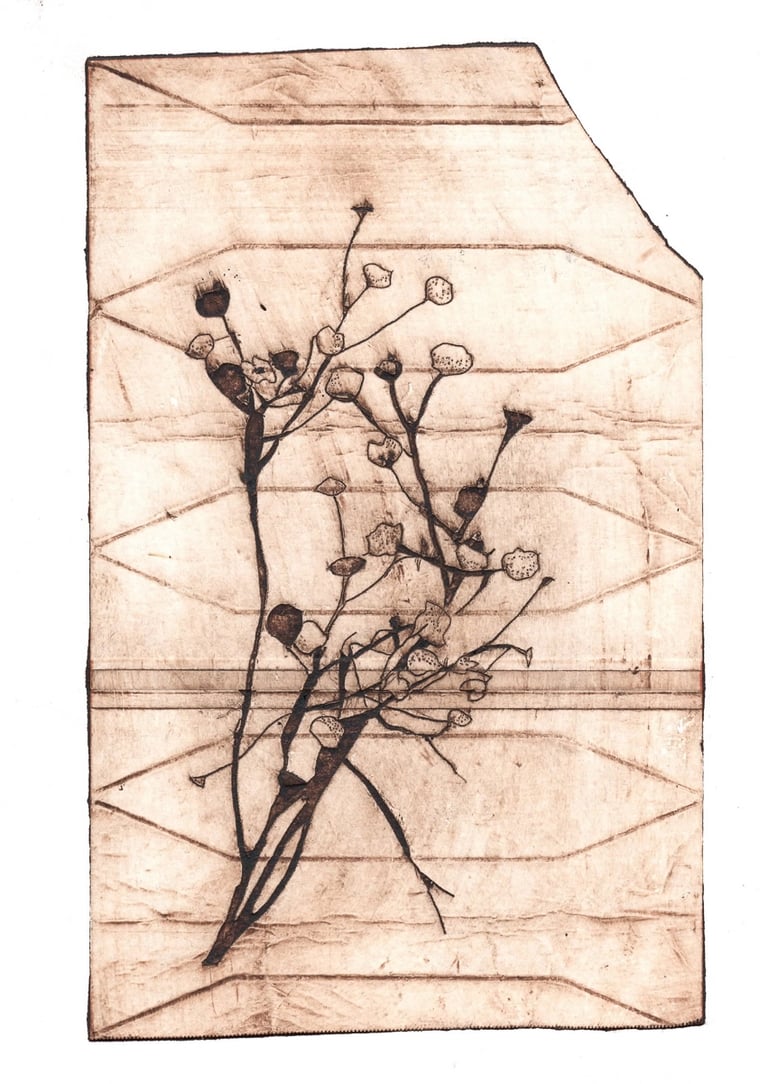
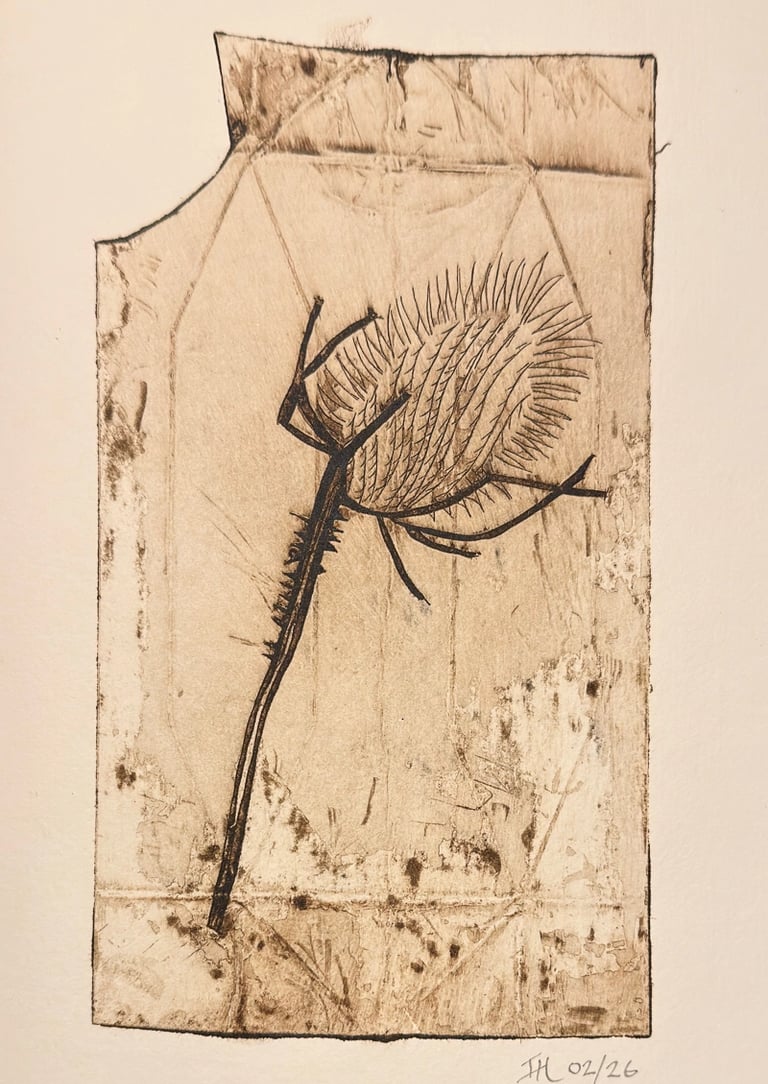
How to make a Tetra Pak print
Practical guide to home printmaking using Tetra Pak and a pasta machine press—a wonderfully accessible and eco-conscious way to make prints.
Gather and prepare your Tetrapak plate
Use a clean, empty juice or milk carton (Tetrapak). Cut it open, flatten it, and rinse thoroughly. Dry it completely. Tetrapak works well because its layered surface (paper + aluminium + plastic) holds ink beautifully.
Cut and flatten your plate
Cut a flat section slightly smaller than your paper. Trim edges neatly (no jagged corners).
Create your image (etching & texture)
Draw into the surface using: Ballpoint pen (gentle lines), Needle or nail (deeper lines), Craft knife (remove top layer for bold areas). You can also: Peel away the shiny layer for dark ink areas and add textures (tape, leaves, fabric). Marks and cuts create grooves that hold ink, similar to traditional intaglio.
Prepare your paper
Use printmaking or watercolour paper. Soak in water for 5–10 minutes. Blot until damp (not dripping).
Ink your plate
Apply ink across the whole plate (card, brush, or fingers). Push ink into all grooves. Then wipe the surface: Use cloth, newspaper, or tissue. Leave ink only in recessed lines.
Set up your “pasta machine press”
A pasta machine works as a DIY press because it applies even rolling pressure.
Layering (“print sandwich”): Top → Card / felt (optional) / Damp paper / Inked Tetrapak plate (face up) / Bottom → Scrap paper/card
Run through the pasta machine
Feed the sandwich slowly through. Use a tight setting (but not so tight it jams). You may need: Felt or fabric to increase pressure and multiple passes. Even pressure is key—this is what pulls ink from grooves into paper.
Reveal your print
Carefully peel paper from the plate, lay flat to dry. You’ll get a soft, etched-style print—often slightly textured and beautifully imperfect.
Clean up
Wipe plate clean (vegetable oil + soap works well). Reuse the plate or modify it for new prints.
Tetrapak printmaking is already sustainable because it reuses waste packaging , but you can go further:
Plate & tools
Recycled Tetrapak cartons, old pens, nails, reused tools.
Ink
Water-based or vegetable oil-based inks. Avoid solvents where possible
Paper
Recycled printmaking paper. FSC-certified or cotton rag paper.
Cleaning
Vegetable oil instead of harsh chemicals. Reusable cloths instead of wipes.
Press setup
Scrap cardboard instead of new boards. Old fabric or felt for padding.
Final tips
Start simple—bold shapes print better than fine detail at first
Pressure is everything: adjust your pasta machine and padding
Keep experimenting—Tetrapak is forgiving and encourages play